English
 French


Busbar Cutting Machine Guide — Quality, Methods & Buying Tips
Specifications to confirm before buying
| Specification | Why it matters |
|---|---|
| Material grade (Cu / Al / laminated) | Cutting load and blade choice |
| Temper | Burr height, wear rate, required force |
| Width × thickness | Capacity and blade clearance |
| Raw bar length | Table and roller support design |
| Finished-length tolerance | Manual stop versus servo or CNC positioning |
| Burr limit | Blade quality and process capability |
| Squareness | Downstream bend, weld and fit |
| Surface and film | Hold-down marks on soft material |
| Cycle time | Automation level and staffing |
| Blade spare lead time | Downtime risk on a busy line |
Cutting methods versus positioning systems
Evaluate how the bar is separated separately from how the length is positioned. They are independent decisions and buyers often conflate them.
Shearing with a hydraulic blade
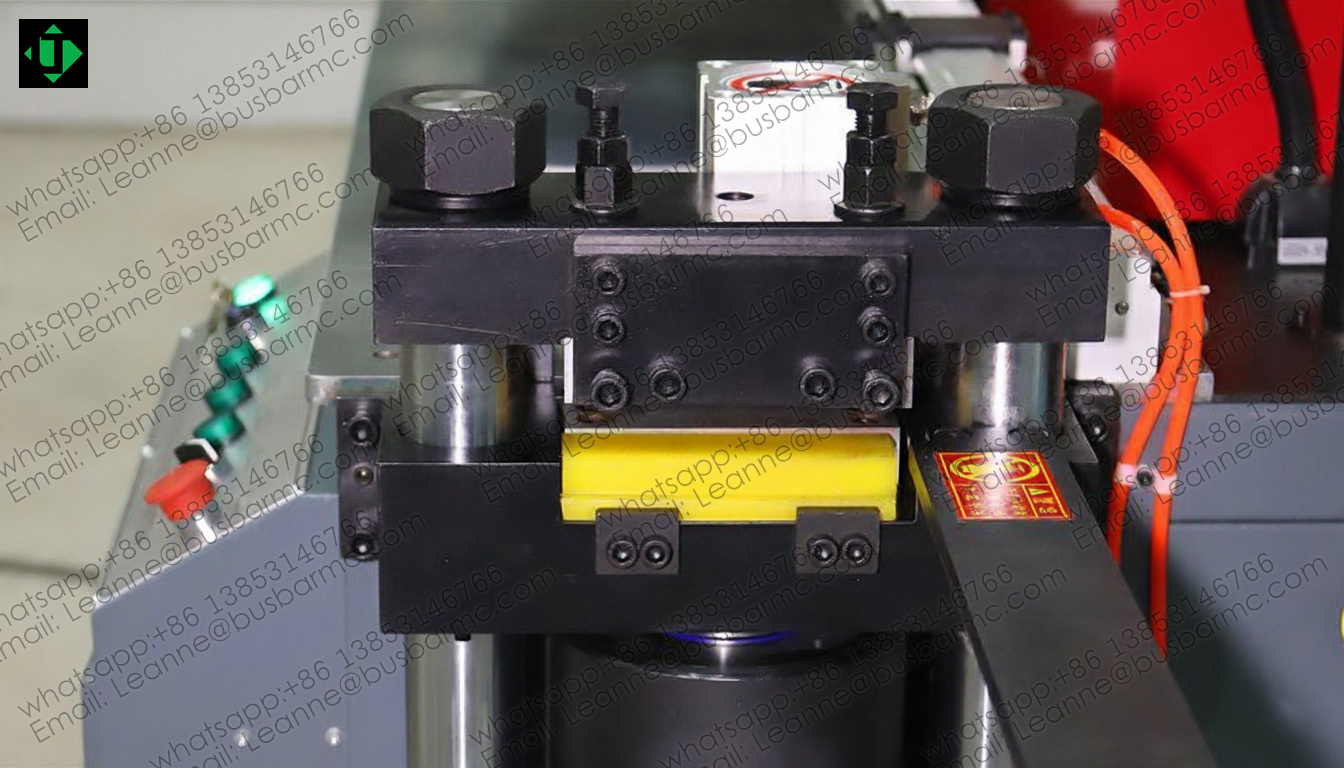
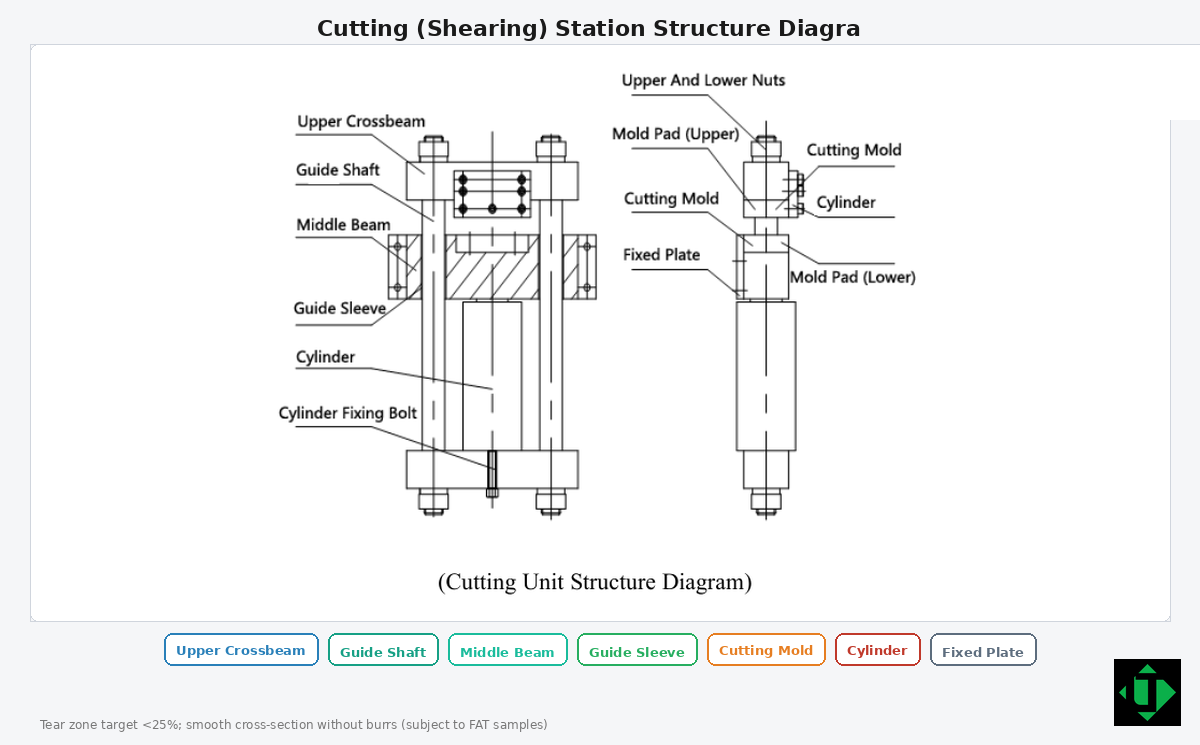
This is the standard method for copper and aluminium busbars: short cycle, limited chips, good edge control. Edge quality depends on clearance, blade sharpness, alignment, clamping and support. Wrong clearance produces burrs and local deformation, and no amount of hydraulic pressure fixes it.
Saw cutting
Consider sawing when the end profile or material condition makes shearing unsuitable, for example thick laminated stacks or a required chamfer. Expect chips, kerf loss and usually a longer cycle. Compare blade life and secondary finishing: a saw is not automatically higher quality, it is a different process.
Manual stop versus servo or CNC positioning
| Positioning | Best fit | Watch-out |
|---|---|---|
| Manual stop or scale | Mixed low volume | Operator variation between shifts |
| Servo length stop | Recurring lengths | Travel range and dead zone |
| CNC program recall | Multi-length kits | Drawing revision control |
Finished-cut results to inspect
Agree these before the FAT: tolerance, instrument, sample quantity, measurement points, inspector and acceptance method. Then inspect finished length, squareness, maximum burr height, end deformation and surface damage.
For continuous tests, record consecutive parts rather than one selected sample. A single perfect cut proves the operator; ten consecutive cuts prove the machine.
Where cutting sits on a 3-in-1 machine
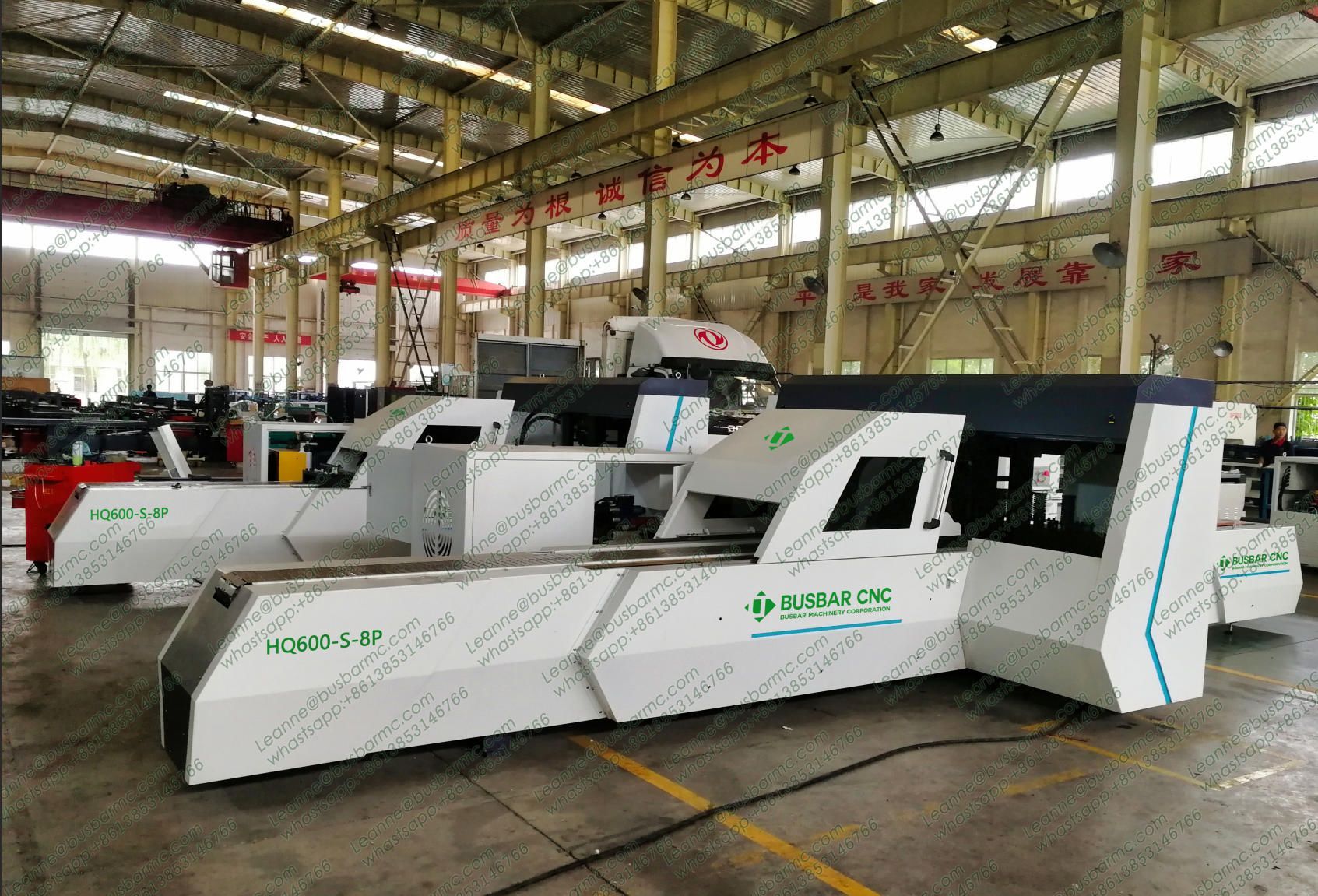
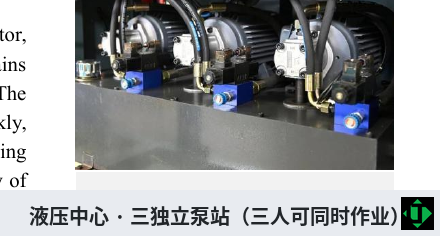
On the LT U-3-C range the shear shares the frame with punch and bend, and each station has an independent pump group so they can run in parallel when staffed. Published shear envelopes track the model class: about 12 × 150 mm on the 303, 16 × 200 mm on the 503 and 20 × 250 mm on the 803.
For a UK shop running mixed panel work, the shear on a 3-in-1 usually replaces a standalone cutter unless cutting hours dominate the week. Where a single machine is dedicated to cutting long busbar runs all day, a dedicated shear with powered feed is the better investment.
Buying tips
Write acceptance numbers for length, squareness and burr height before you send the RFQ.
Ask for blade material, recommended clearance and spare blade lead time.
Match the positioning method to how often lengths repeat in your work.
If most jobs also punch and bend, prefer a correctly sized 3-in-1 over a lonely shear.
Require a FAT on your representative section, not on brochure copper.
Frequently asked questions
What is a busbar cutting machine?
Equipment that shears or saws copper and aluminium busbars to drawing length with controlled edge quality. It may be a standalone machine or the shear station of a three-in-one busbar machine.
Should I choose a shear or a saw?
Shear for most flat copper and aluminium production. Choose saw when the drawing or material rejects shearing, and compare cycle time, kerf loss, chips and secondary finishing rather than assuming a saw is more accurate.
Can the shear on a 3-in-1 replace a dedicated cutter?
Often yes for mixed SME work. Choose a dedicated cutting station or automatic feed line when cutting hours per day justify the separate capacity.
How do I judge busbar cut quality?
Measure finished length, squareness, maximum burr height, end deformation and surface damage on several consecutive parts using agreed instruments.
What shear capacity do the LT models cover?
About 12 × 150 mm on the 303U-3-C, 16 × 200 mm on the 503U-3-C and 20 × 250 mm on the 803U-3-C. Confirm the exact width wording on the order acknowledgement.