English
 French


How CNC Busbar Machines Improve Manufacturing Efficiency
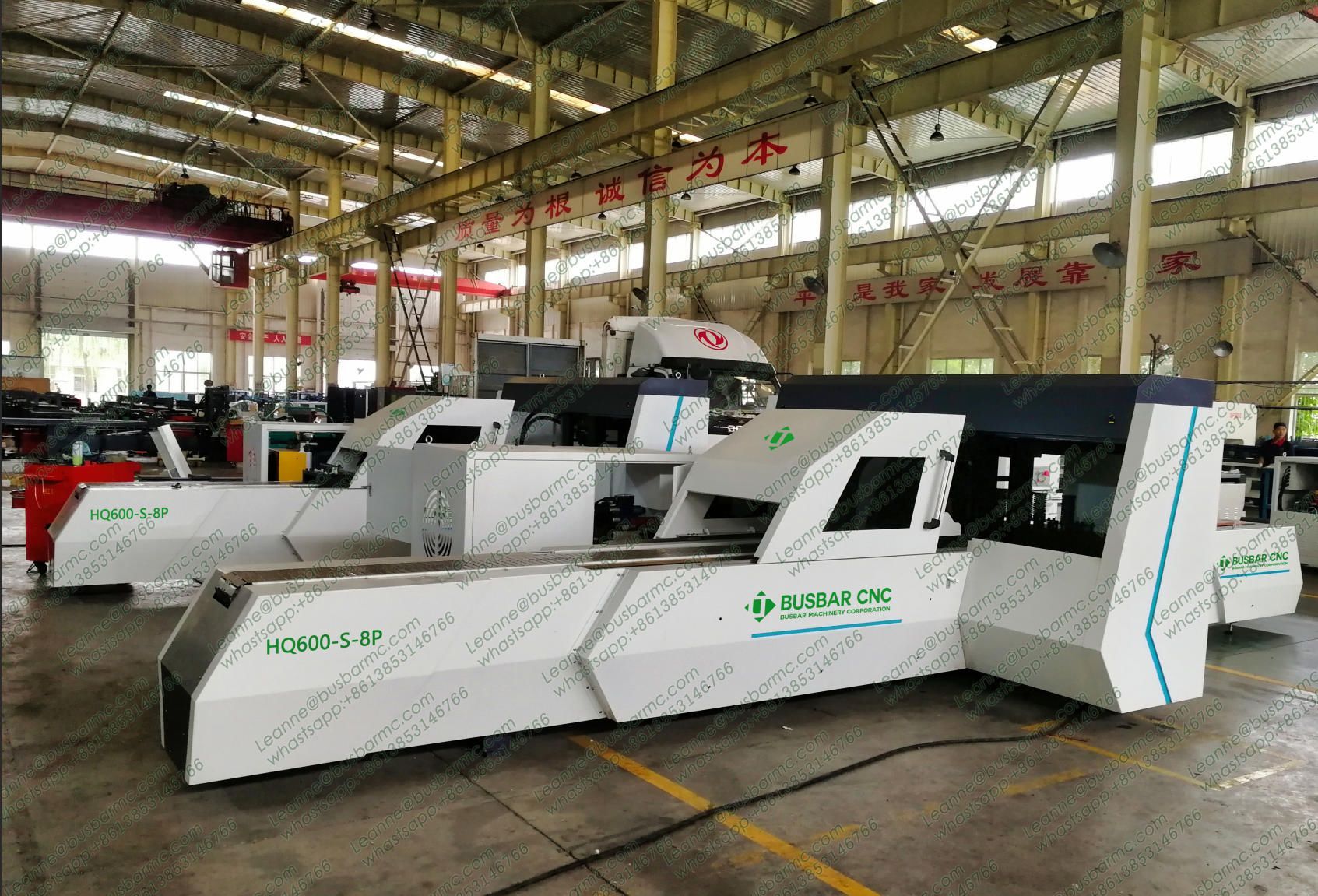
What CNC actually controls
Depending on configuration, CNC or servo control may cover length stops, hole coordinates, bend stroke and angle recipes, or stored programs. It does not automatically mean automatic loading, tool change or inspection. List every controlled axis and every remaining manual step in the quotation, because that list is what you are buying.
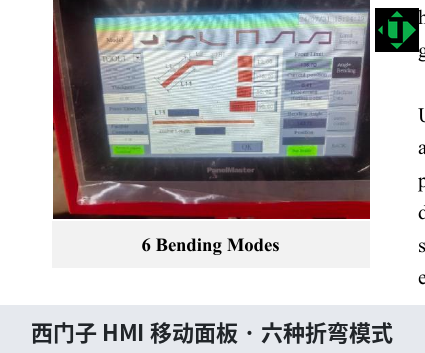
Hydraulic force and CNC control are not mutually exclusive. Many efficient cells use hydraulic stations with servo positioning and PLC bend libraries — the hydraulics provide the force, the control provides the repeatability.
Where time is really saved
| Lever | What improves | Metric to record |
|---|---|---|
| Automatic or servo positioning | Less marking and ruler work | Positioning minutes per part |
| Stored programs | Faster repeat orders | Program to first conforming part |
| Prepared changeovers | Model A to model B | Full changeover clock time |
| Data or DXF import | Less re-keying | Import to verified program time |
Only count axes that are genuinely CNC-controlled. Manual stations remain inside the complete cycle time, and ignoring them flatters every quotation.
Metrics that matter
Conforming parts per shift
Complete cycle time from load to inspection
Operator minutes per conforming part
First-pass yield
Rework rate
Net copper or aluminium loss
Changeover time from last good A to first good B
Evaluate all seven under fixed drawings, material, tooling, operator and inspection rules. Change two variables at once and the comparison tells you nothing.
Environments that benefit most
| Application | CNC saves time when… | Limitation |
|---|---|---|
| Switchgear panels | Breaker-hole kits and cabinet recipes recur | Drawing revision control |
| Transformers and distribution | Long or heavy bars need fewer re-measures | Still need support and capacity |
| Energy storage | Dense compact hole maps | First article still mandatory |
| Mixed SME shop | Recipes cut setup chaos | Low-volume one-offs may not pay back |
Baseline test for supplier comparison
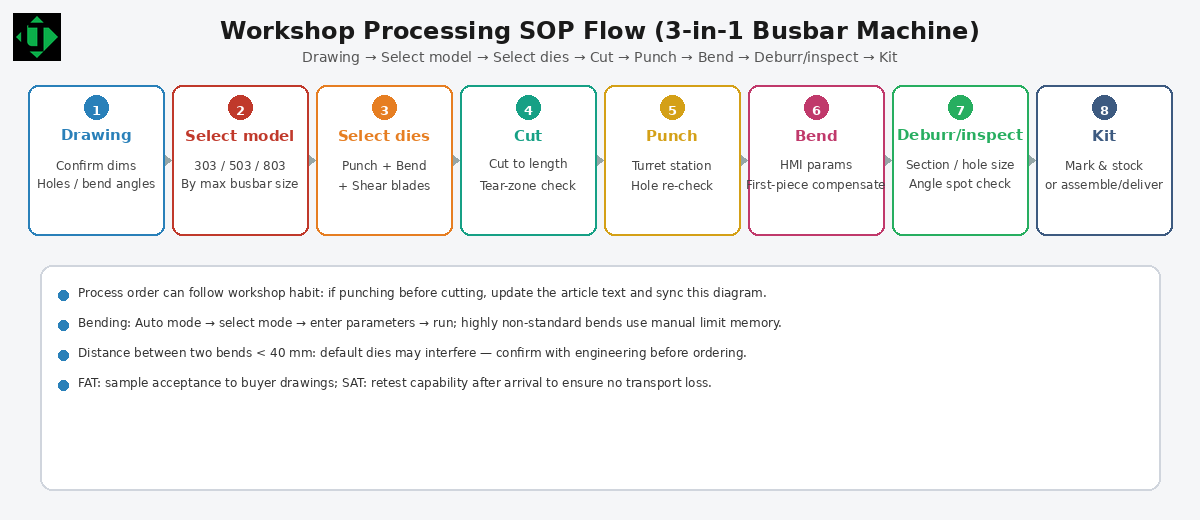
Pick one approved copper drawing that you actually run in production.
Run a manual or basic baseline and record cycle, operators and defects.
Run the CNC or recipe method on the same drawing.
Compare conforming output and changeover, not peak stroke rate.
Lock the winning program with drawing number and revision.
This test takes a day and settles arguments that a brochure cannot. It also gives you a defensible payback number for the capital request.
Model capacity
| Specification | 303U-3-C | 503U-3-C | 803U-3-C |
|---|---|---|---|
| Nominal force | 300 kN | 500 kN | 800 kN |
| Punching diameter | Φ4.3–25 mm | Φ4.3–30 mm | Φ4.3–34 mm |
| Max. thickness × width | 12 × 150 mm | 16 × 200 mm | 20 × 250 mm |
| Max. horizontal bend | 150 × 12 mm | 200 × 16 mm | 250 × 20 mm |
| Max. vertical bend | 10 × 100 mm | 12 × 120 mm | 12 × 120 mm |
| Motor power | 3 × 4 kW | 3 × 5.5 kW | 3 × 5.5 kW |
| Bend accuracy / repeat | ±1° / ±0.5° | ±1° / ±0.5° | ±1° / ±0.5° |
| Approx. mass | 1,400 kg | 1,700 kg | 2,100 kg |
Frequently asked questions
Do CNC busbar machines always run faster than hydraulic 3-in-1s?
Not always. CNC helps when positioning or setup is the bottleneck. Pure stroke speed is a weak KPI and often hides extra handling.
Is an HMI bend mode the same as a full CNC line?
No. PLC and HMI mode libraries improve bend repeatability. A full CNC line adds feeding, nesting and automation scope. Confirm which one the quotation describes.
What should I ask a vendor to prove efficiency?
A side-by-side trial on your own drawing with recorded conforming parts, operator minutes and changeover times.
Which LT features support efficiency?
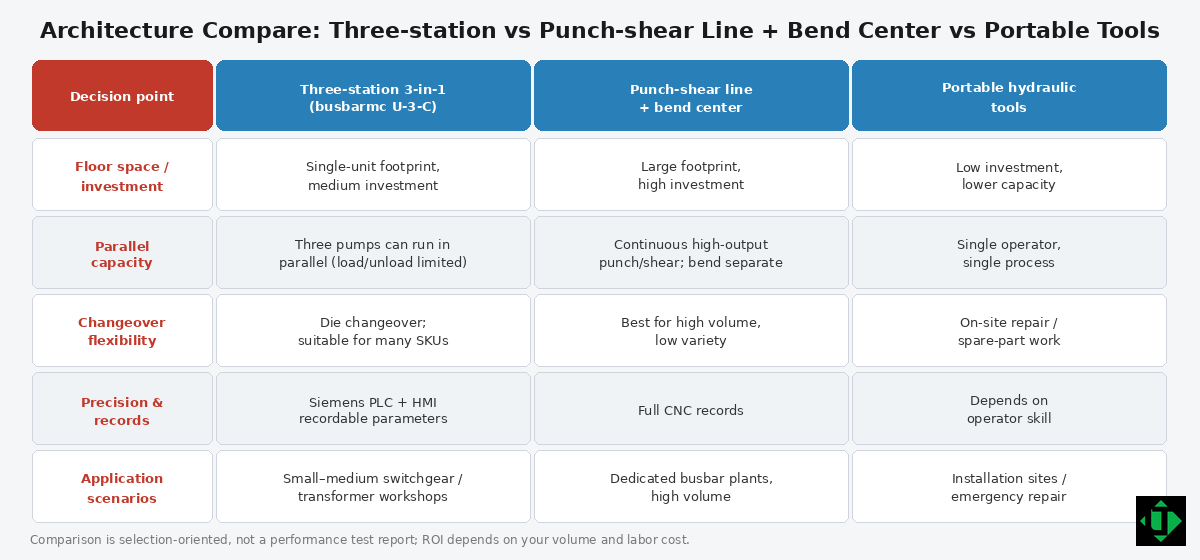
Three independent pump groups, Siemens PLC bend modes, HMI recipes and optional servo positioning. Confirm the exact option list on the order acknowledgement.
How do I calculate payback on a CNC busbar machine?
Multiply saved operator minutes per part by your loaded labour rate and annual volume, then add rework and scrap savings. Compare that annual figure with the price difference against a manual machine.